ANSI & ISO Safety Labels
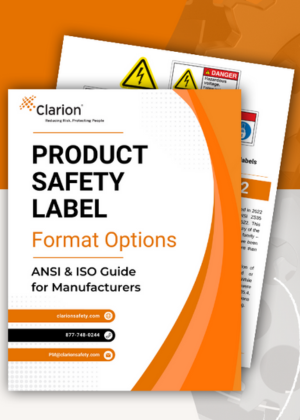
Download Our ANSI/ISO Label Guide for Manufacturers
Download NowEvery safety label on your product is a legal document, a training tool, and a last line of defense when a guard fails. Clarion Safety builds ANSI and ISO safety labels to the formats defined in ANSI Z535.4 and ISO 3864-2, using ISO 7010 symbols that communicate hazards across languages and reading levels. Browse more than 1,300 stock designs below, filtered by signal word, hazard type, and format, or work with our standards-trained team on a custom label system.
Not sure which standard applies to your market? The comparison further down this page breaks down when to specify ANSI labels, when to specify ISO labels, and when your product needs both.
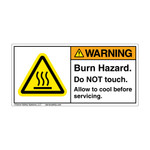
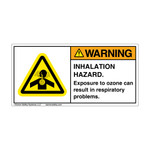
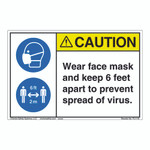
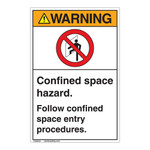
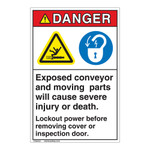
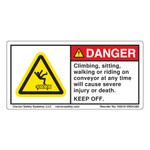
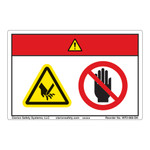

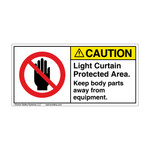
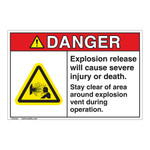
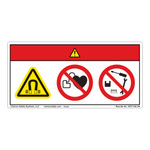
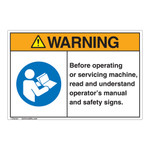

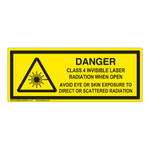
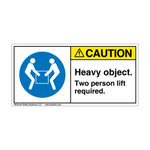
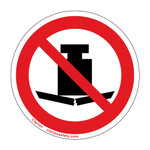
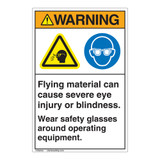
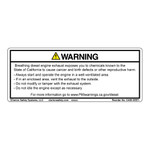
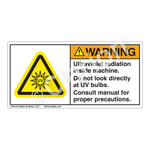
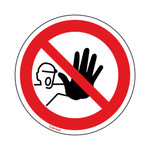
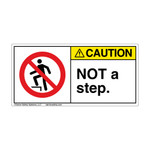
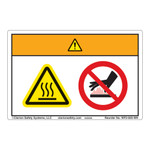
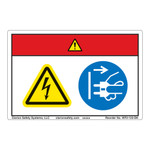
What Separates a Compliant Safety Label From a Warning Sticker
A safety label becomes compliant when its content, format, and placement all trace back to a documented standard and a documented hazard. Anything short of that is decoration that carries risk without reducing it.
The distinction matters in litigation. Claims alleging failure to warn and inadequate warnings turn on whether the label told the user what the hazard was, what would happen, and how to avoid it. A label that shows a symbol without context, or a signal word without a hazard description, gives opposing counsel an opening, and can result in injury or death to the operator.
The Four Content Elements of a Hazard Alerting Label
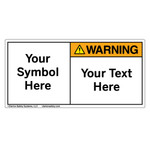
ANSI Z535.4 specifies that a hazard alerting product safety label communicates four things:
- The nature of the hazard. Electric shock, cut, burn, crush, entanglement, etc.
- The consequence of interacting with it. What happens to the person.
- How to avoid it. The specific action the user must take.
- The seriousness of the hazard. Carried by the signal word panel.
The first three are conveyed through the word message, one or more symbols, or both. The signal word panel carries the fourth on its own. Labels that drop the avoidance instruction are the most common gap we find during free label consultations, and they are the hardest to defend after an incident.
Why Signal Word Choice Changes Your Liability Exposure
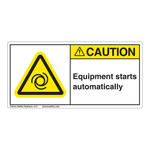
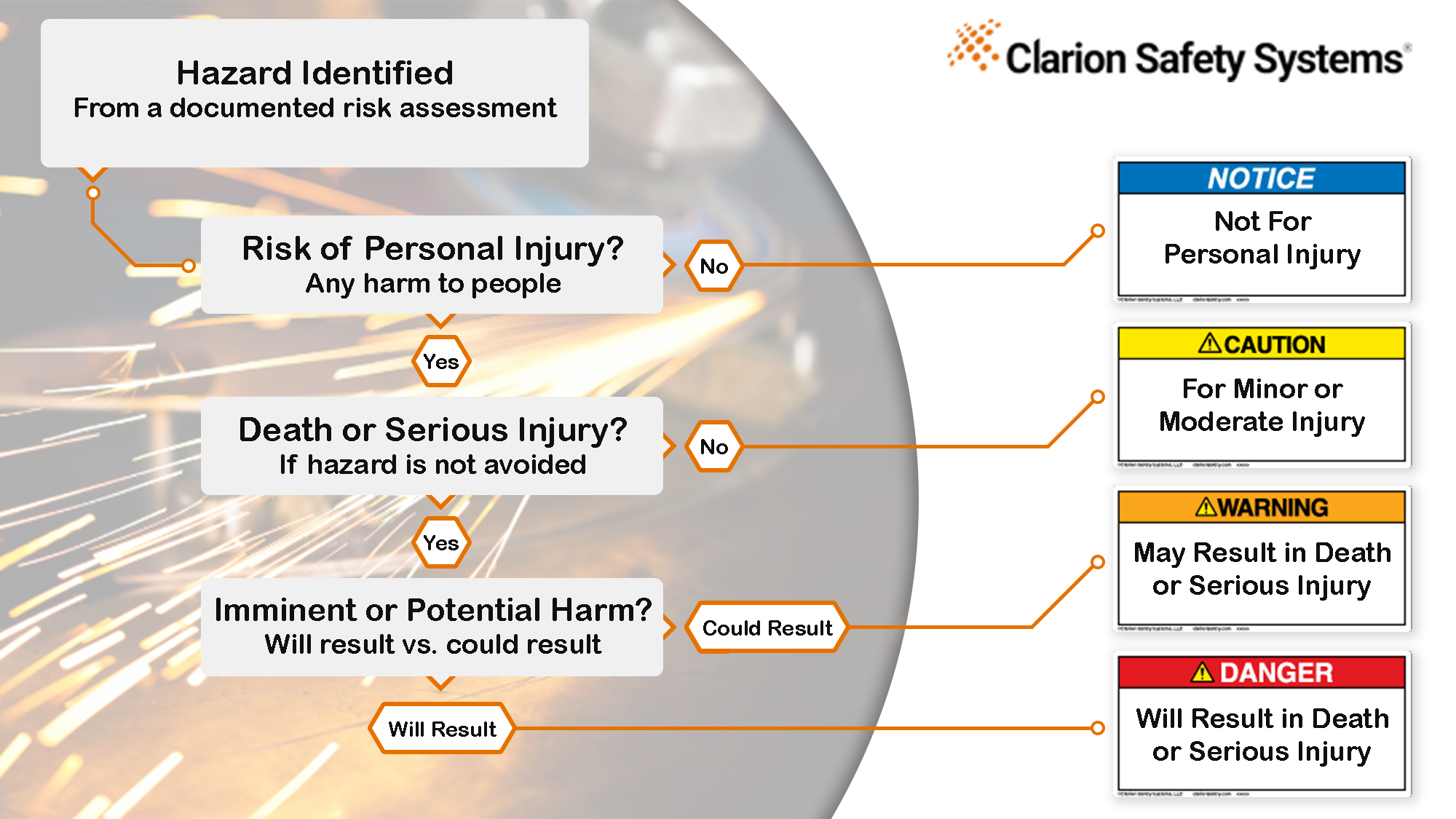
DANGER, WARNING, CAUTION, and NOTICE are not stylistic options. Each maps to a defined severity level, and using DANGER where WARNING applies erodes the credibility of every DANGER label on the machine. Over-warning trains operators to ignore the panel that actually matters.
DANGER is reserved for imminent hazards that will result in death or serious injury if not avoided. WARNING covers potential hazards that could result in death or serious injury if not avoided. CAUTION addresses hazards that could cause minor or moderate injury. NOTICE handles property damage and practices unrelated to personal injury. The ANSI Z535.4 content guide walks through the decision in detail.
ANSI Safety Label Standards for U.S. Products
ANSI safety label standards come from the Z535 committee of the American National Standards Institute, which develops a single uniform graphic system for presenting safety and accident prevention information. The Z535 family operates on a five-year revision cycle.
ANSI standards are voluntary, which is a technical description rather than a practical one. OSHA references specific ANSI standards inside enforceable regulations, and courts treat the standards as evidence of industry practice. When a standard is revised, your duty to warn obligates you to reassess whether existing labels still meet it.
ANSI Z535.4: Product Safety Signs and Labels
ANSI Z535.4 is the standard that governs ANSI warning labels applied to products. It establishes the requirements for safety symbols and label formats intended to identify hazards associated with the product itself, as distinct from hazards in the facility around it.
If you manufacture equipment sold into the U.S. market, Z535.4 is the standard your on-product labels are measured against. Full detail: Proper Content for ANSI Z535.4 Product Safety Labels.
How ANSI Z535.1 Colors and Z535.3 Symbols Work Together
ANSI Z535.1 defines the safety color codes used across signs, labels, and tags. Consistent color use increases how quickly a worker recognizes a hazard, which directly increases available reaction time. The standard specifies nine colors and their combinations. See Safety Colors and ANSI Z535.1.
ANSI Z535.3 governs the design, evaluation, and use of the symbols themselves, sorted into four types: hazard alerting, mandatory action, prohibition, and information. Consistent symbol design builds familiarity, which is what makes a small variation, such as adding a hard hat, register as meaningful rather than as noise. See Criteria for ANSI Z535.3 Safety Symbols.
A label that uses Z535.4 formatting with off-standard colors or unregistered symbols is not compliant. The three standards are specified together or not at all.
When ANSI Labels Need Manual and Collateral Support
ANSI Z535.6 covers safety information in product manuals, instructions, and collateral materials. It groups safety messages into supplemental directives, grouped safety messages, section safety messages, and embedded safety messages.
This is where most labeling programs break down. The label on the machine says "read manual before servicing," and the manual it points to has no corresponding safety section. Read more in the ANSI Z535.6 guide, or have your documentation reviewed through our manual audit and design service.
ISO Safety Label Standards for Global Markets
ISO safety labels follow a different design logic than ANSI labels. Where ANSI leans on text and signal words, ISO leans on symbols and surround shapes, because an ISO label has to work in a market where you cannot predict the reader's language.
ISO 3864-2: Design Principles for Product Safety Labels
ISO 3864 is a set of four standards specifying international requirements for safety signs, labels, and markings. ISO 3864-2, Graphical symbols, Safety colours and safety signs, Part 2: Design principles for product safety labels, extends ISO 3864-1 specifically to products, covering consumer goods and industrial equipment.
ISO 3864-2 does not apply to chemical labeling, where GHS takes precedence, or to the transport of dangerous substances. For chemical hazard communication, see GHS Pictograms and Chemical Hazard Labels.
The standard covers the decision path for label content: which ISO 7010 symbols to use and whether to use them individually or in combination, what supplementary text belongs on the label, what belongs in the manual instead, whether to include a hazard severity panel, and whether borders should separate content. Full breakdown: Everything You Need to Know About ISO 3864-2.
ISO 7010 Symbols and the Surround Shape Requirement
ISO 7010 is the registered library of standardized safety symbols, and it is the piece most often misapplied. Under current ISO 3864-2 formatting, a product safety label cannot rely on a symbol that lacks an ISO surround shape. A symbol without a surround shape is a supplementary symbol, not a safety symbol.
What this means for your labels: audit your product line for any label carrying only non-ISO supplementary symbols. You can keep those symbols, but each label needs at least one true safety symbol with a surround shape alongside them. Browse ISO 7010 symbol products.
The Wordless Hazard Severity Panel
ISO 3864-2 includes a wordless format that conveys risk severity through specified colors and ISO symbols. It exists to communicate seriousness without text, which removes the translation burden and reduces the physical space a label consumes.
For manufacturers running a labeling refresh across international product lines, the hazard severity panel replaces what used to require several language variants of the same label. Fewer SKUs, fewer reorder errors, one label that works in every market. See our wordless format labels.
Choosing Between ANSI Labels and ISO Labels for Your Market
Consideration |
ANSI Z535.4 |
ISO 3864-2 |
|---|---|---|
| Primary Market | United States | International, EU, global distribution |
| Governing Body | ANSI Z535 committee | International Organization for Standardization |
| Message Delivery | Signal word panel plus text, symbols optional but recommended | Symbol-led, text supplementary |
| Severity Indication | DANGER, WARNING, CAUTION, NOTICE signal words | Hazard severity panel, wordless format available |
| Symbol Library | ANSI Z535.3 criteria | ISO 7010 registered symbols |
| Color Specification | ANSI Z535.1 | ISO 3864-1 |
| Translation Burden | High for multilingual markets | Low, symbols carry the message |
| Chemical Hazards | Handled separately under HazCom and GHS | Explicitly out of scope, GHS takes precedence |
Products distributed in both markets generally need a harmonized label system rather than two separate ones. A well-designed label can satisfy ANSI Z535.4 and ISO 3864-2 at the same time by pairing an ISO 7010 symbol with an ANSI signal word panel. Getting that harmonization right is what our free label consultation exists to solve.
Durable Materials, Tested Adhesives, Proven Placement
A compliant label that falls off, fades, or delaminates stops being compliant the moment it fails. ISO 3864-2 addresses durability directly, and ISO 17398 covers the testing specifics.
Specification factors that determine label life:
- Surface energy and texture. Powder coat, bare metal, and textured polymer each require different adhesive systems.
- Chemical and UV exposure. Solvent wipe-down, coolant contact, and outdoor placement drive substrate choice.
- Temperature range. Both operating temperature and application temperature.
- Observation distance. Determines minimum symbol and text size.
- Reorder identification. Printing the part number on the label itself keeps replacements consistent across production runs.
Clarion labels are produced on 3M materials. See premium quality safety label materials for substrate specifications, and safety label ordering considerations for quantity, reorder, and shelf life guidance.
Close Compliance Gaps, Harmonize Markets, Reduce SKUs
Members of the Clarion Safety team hold seats on the ANSI and ISO committees that develop these standards, so our guidance reflects where the standards are heading and not only where they have been. In 30-plus years and more than 100 million labels in service, no Clarion customer has faced a warnings-based allegation.
Building a new product line? Start with a product risk assessment. Need something outside the stock catalog? Design your own ANSI and ISO compliant labels.
Not sure whether your product labels meet current ANSI and ISO requirements?
A free label review from the Clarion Safety team can help!